

On Set
What to put on a call sheet
July 2026 · 7 min read
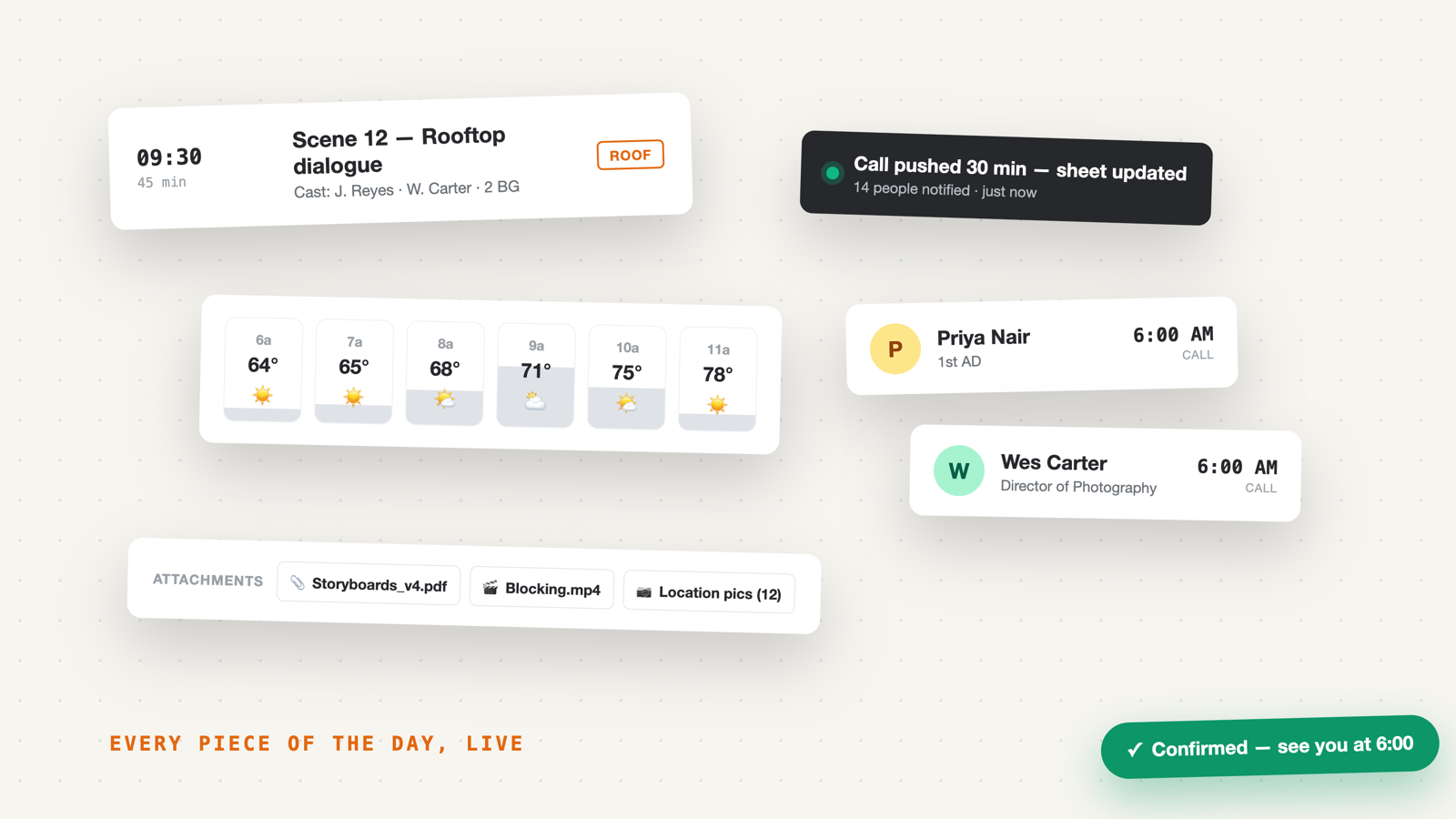
A call sheet has one job: make sure every person shows up at the right place, at the right time, knowing what they're doing that day. Everything on it either serves that job or gets in its way. Here's what belongs, roughly in the order your crew will look for it.
The non-negotiables
- Production name, shoot date, and day number (Day 2 of 4): people work multiple jobs; never make them guess which one this is.
- General crew call time, big and unmissable, plus an estimated wrap.
- Location(s) with full street addresses, not venue names alone. Include parking instructions; nothing burns goodwill like circling a block at 5:45 AM.
- Individual call times for anyone who differs from general call: HMU, camera pre-rigs, talent staggered through the day.
- Key contacts: who to call when something goes wrong, with phone numbers that will actually be answered.
- Weather, sunrise and sunset. Exteriors live and die by this.
- Nearest hospital with address. You'll never need it until the one day you really, really do.
The schedule
The day's spine, in order: scenes with numbers and short descriptions, meal breaks, company moves, and any hard outs. Keep descriptions to one line: the shooting schedule holds the detail; the call sheet holds the shape of the day. If a strip only applies to some departments, mark it so, or better, only show it to them.
People, by department
Cast first (with character names and work status if you use them), then crew grouped by department, then clients and agency. Each person's position and call time at minimum. Whether to print phone numbers is a real decision: crew usually want each other reachable; clients usually shouldn't be woken up by a PA at 6 AM. Make contact visibility deliberate, not accidental.
The details that separate good from great
- Meal times and head counts: caterers plan by these numbers.
- Safety notes for anything non-routine: stunts, water, drones, working around picture vehicles.
- A set medic, named, with a phone number, whenever the day warrants one.
- Walkie channels, assigned by department, printed where everyone can find them.
- Background/extras count and their separate call time and holding area.
- Revision number and color when the sheet changes after it's sent. The industry's Blue/Pink/Yellow convention exists because "which version do you have?" is a terrible 6 AM conversation.
What to leave off
Anything the whole crew doesn't need: budgets, client politics, department-internal paperwork. Attach those as separate files for the people who need them instead of burying the call time under them. A call sheet that's three pages of everything is a call sheet nobody reads.
The delivery problem
The best-built sheet still fails if it's a PDF from three revisions ago sitting in someone's inbox. That's the problem AllSheets exists to solve: every recipient gets a personal live link that always shows the current version, confirms their call time in a tap, and tells you who's seen it. However you build your sheets, make sure the version in the crew's hands is the version you think it is.
Are you crew?
AllSheets keeps every call sheet you’re sent in one place. Forward any sheet and it becomes a live, organized page with weather, maps, and your call time up top. Free, forever.
Join free →Are you a producer?
Build the day once and send everyone a personal live link. Late changes push instantly, and you can see who’s confirmed. 14-day free trial for production companies.
Start a free trial →