

On Set
Turnaround and meal breaks: the clock math that shapes every schedule
July 2026 · 6 min read
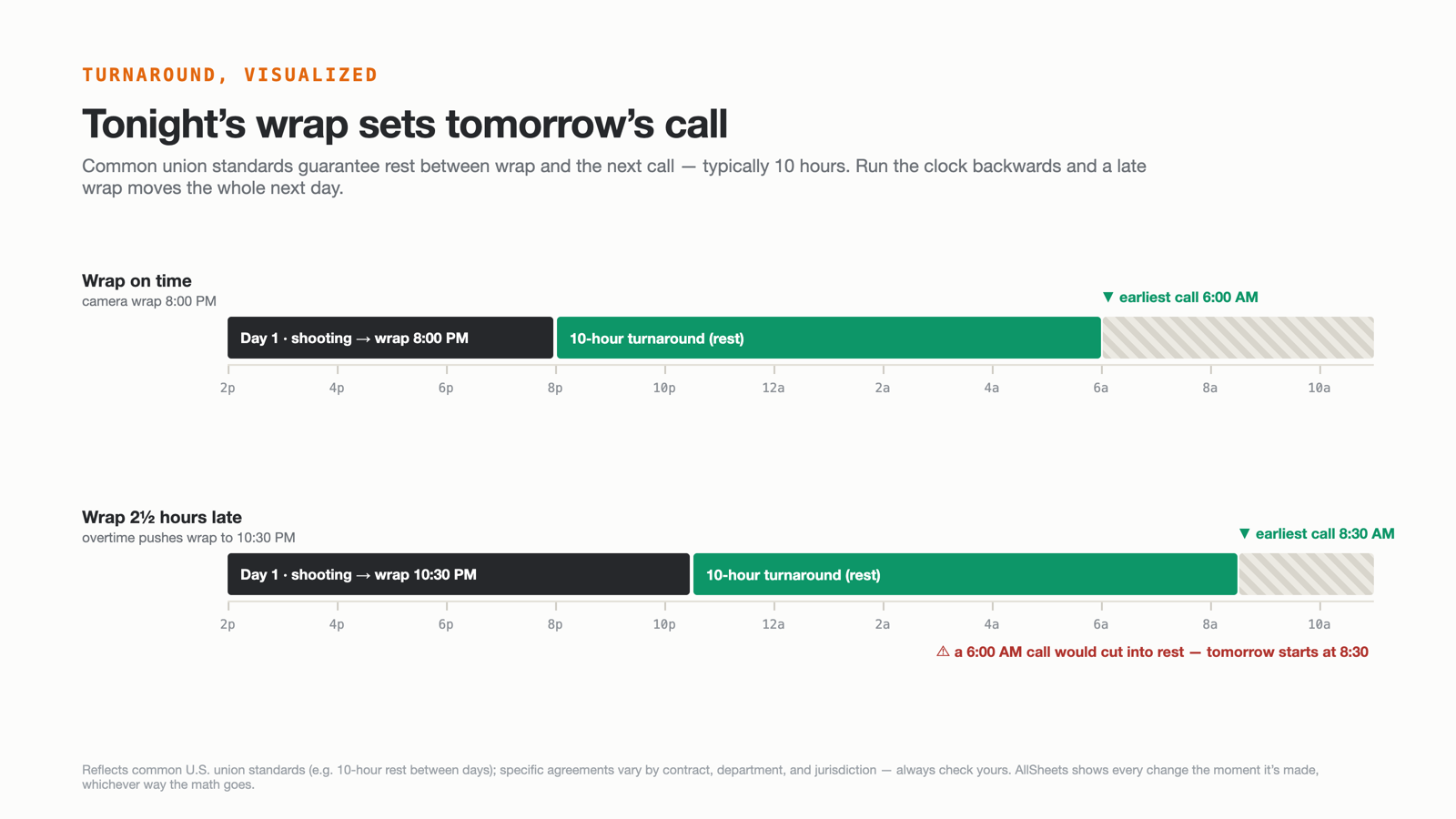
Two rules shape more schedules than any creative decision: crews rest between days, and crews eat every six hours. Under common union standards those show up as a 10-hour turnaround and a 6-hour meal interval, and even on non-union jobs, smart producers treat them as the floor for a crew that's safe, sharp, and willing to come back. Here's the arithmetic.
Turnaround: tonight sets tomorrow
Turnaround is the guaranteed rest between one day's wrap and the next day's call, commonly 10 hours. The math is unforgiving: wrap at 8:00 PM and a 6:00 AM call is fine. Run two and a half hours of overtime to 10:30 PM, and the earliest compliant call becomes 8:30 AM. Tomorrow's schedule just lost two and a half shooting hours, or the production pays penalties to invade the rest window.
This is why ADs treat the last hour of a day so carefully. Overtime isn't just tonight's cost; it cascades into tomorrow's daylight, tomorrow's company move, tomorrow's everything.
The meal clock
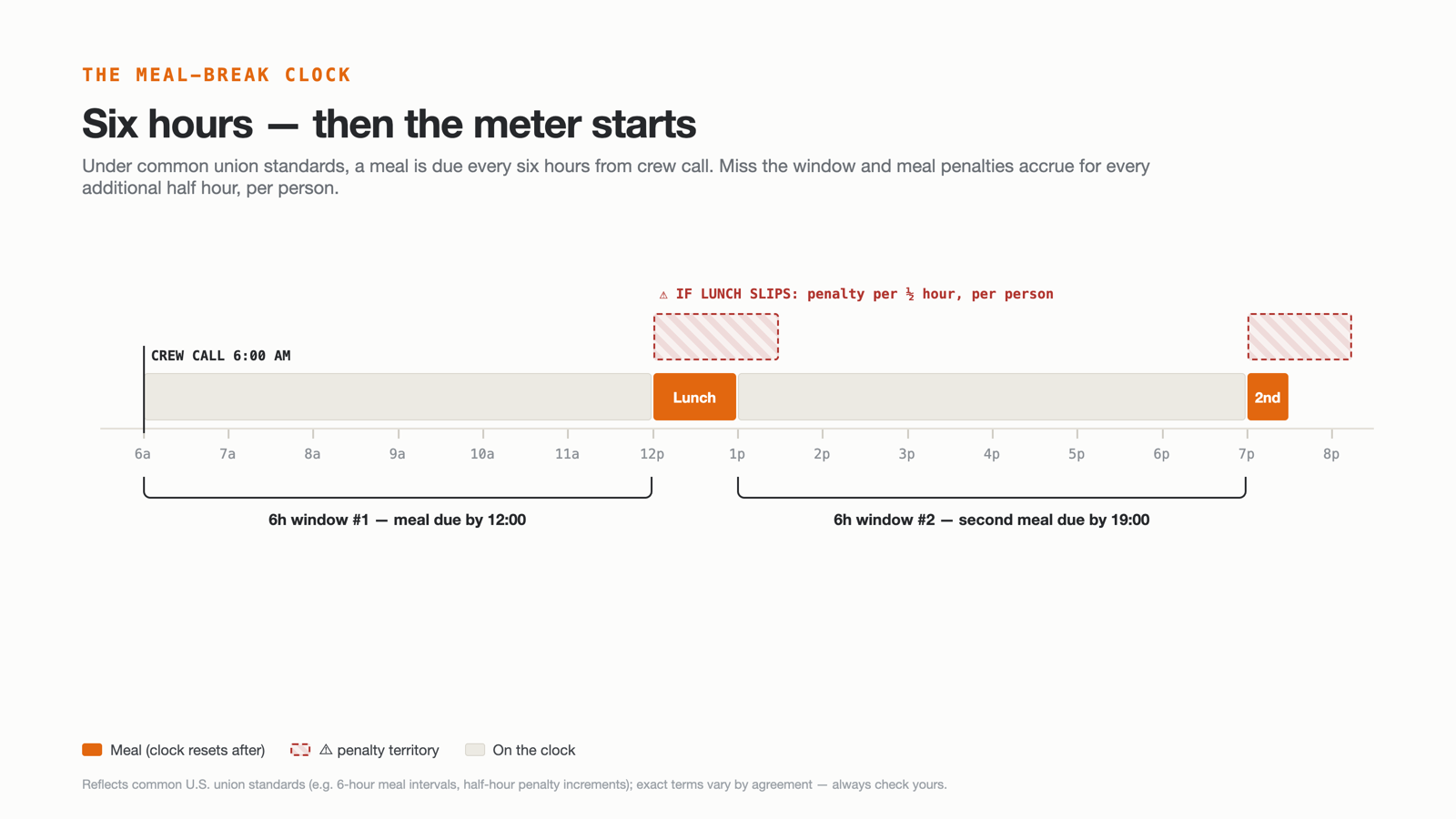
The second clock starts at crew call and rings every six hours. Call at 6:00 AM means a meal is due by noon; break lunch at noon and the second-meal deadline lands at roughly 7:00 PM. Miss a window and meal penalties accrue, typically per additional half hour, per person, which on a 40-person crew turns "let's just finish the scene" into real money.
How the clocks interact
- Lunch splits the day into a 6-hour morning and an afternoon that must end before the second-meal line, which is why a 6:00 AM call so often wraps at 6:00 PM.
- A late wrap tonight pushes call tomorrow, which pushes lunch tomorrow, which pushes wrap again: schedules drift in one direction unless someone pays to reset.
- Every one of these numbers changes when the schedule changes, which is exactly when crews are looking at an outdated PDF.
One honest caveat: "common standards" is doing real work in those sentences. Exact turnaround hours, meal intervals, and penalty rates vary by agreement, department, and jurisdiction; always check the contract that actually governs your shoot. The pattern, though, is universal: the clocks are connected, and the call sheet is where everyone reads them. When a wrap moves at 9 PM, an AllSheets schedule cascades the change and every crew member's live link shows the new call: no re-send, no stale PDF doing tomorrow's math with yesterday's numbers.
Are you crew?
AllSheets keeps every call sheet you’re sent in one place. Forward any sheet and it becomes a live, organized page with weather, maps, and your call time up top. Free, forever.
Join free →Are you a producer?
Build the day once and send everyone a personal live link. Late changes push instantly, and you can see who’s confirmed. 14-day free trial for production companies.
Start a free trial →