

On Set
How to read a call sheet like a pro
July 2026 · 6 min read
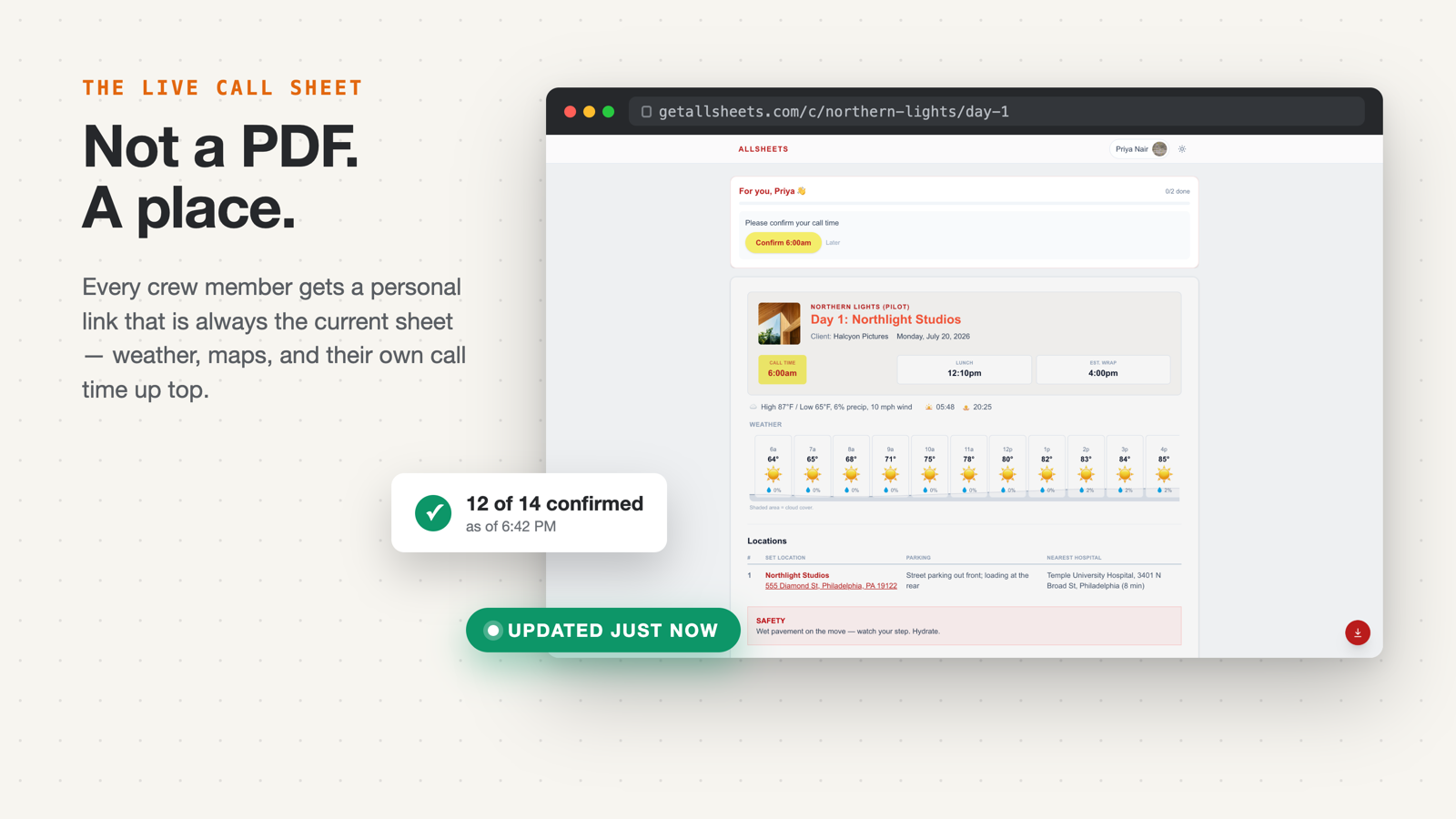
A call sheet lands in your inbox the night before a shoot and it's dense: times, addresses, department grids, abbreviations. Experienced crew extract everything they need from it in about ninety seconds, because they read it in a fixed order. Here's that order.
1. Find YOUR call time, not the general call
The big time at the top is the general crew call. It may not be yours. Scan the people section for your name: HMU and camera often call earlier, talent is usually staggered through the day, and some departments come in after lunch. Your name's row is the truth; the big number is just the default. If your name isn't on the sheet at all, say something tonight, not at the gate tomorrow.
2. Location, then parking, then travel time
- Read the full address, not the venue name: plenty of studios have two buildings on opposite sides of town.
- Find the crew parking note. Where you park is almost never where you shoot, and the walk can add fifteen minutes.
- Check for a company move. If the day has two locations, you'll want fuel, and you'll want to know before your navigation app does.
- Do the travel math tonight, against the call time, for the traffic that exists at that hour.
3. The shape of the day
Skim the schedule top to bottom once: first setup, meal times, the big rocks (stunts, sunset shots, wrap-out constraints). You're not memorizing it; you're building the mental movie of the day so nothing on it surprises you. Note anything with your department's name on it.
4. Decode the abbreviations
- INT/EXT = interior or exterior scene; D/N = day or night.
- Scene numbers match the script; pages are counted in eighths (2 3/8 = about two and a third pages).
- Cast status codes: SW = start work, W = working, WF = work finish, H = hold.
- OC = own car, W/N = will notify, TBD next to a time means check tomorrow's revision.
5. Weather, safety, and the fine print
Exterior day? The weather block decides your clothing and your department's cover plan. Read the safety notes every time; they're short, and they're only there when something on the day earned them. Note the nearest hospital line exists (you don't need to memorize it; you need to know it's there), and find the walkie channel grid if your department runs on comms.
6. Confirm, then keep it findable
If the production asks for a confirmation, send it: a confirmed sheet is the coordinator's proof the day will start on time, and being the person they never chase is quietly great for your career. Then make sure you can find the sheet at 5 AM with cold hands: if it came as an AllSheets live link, it's always the current version and one tap confirms your call; if it came as a PDF, watch your inbox for revisions, because the sheet you saved at 8 PM may not be the sheet at midnight. Either way, the crew who keep every sheet they've ever been sent in one searchable place stop losing gate codes, contact names, and 'what was that location again?' forever.
The rookie tells (avoid these)
- Showing up at general call when your department was called forty-five minutes earlier.
- Navigating to the shoot address instead of crew parking.
- Asking the coordinator questions the sheet already answers. Read it twice before you text once.
- Not noticing the revision color changed after you first read it.
Are you crew?
AllSheets keeps every call sheet you’re sent in one place. Forward any sheet and it becomes a live, organized page with weather, maps, and your call time up top. Free, forever.
Join free →Are you a producer?
Build the day once and send everyone a personal live link. Late changes push instantly, and you can see who’s confirmed. 14-day free trial for production companies.
Start a free trial →