

On Set
The anatomy of a shoot day
July 2026 · 7 min read
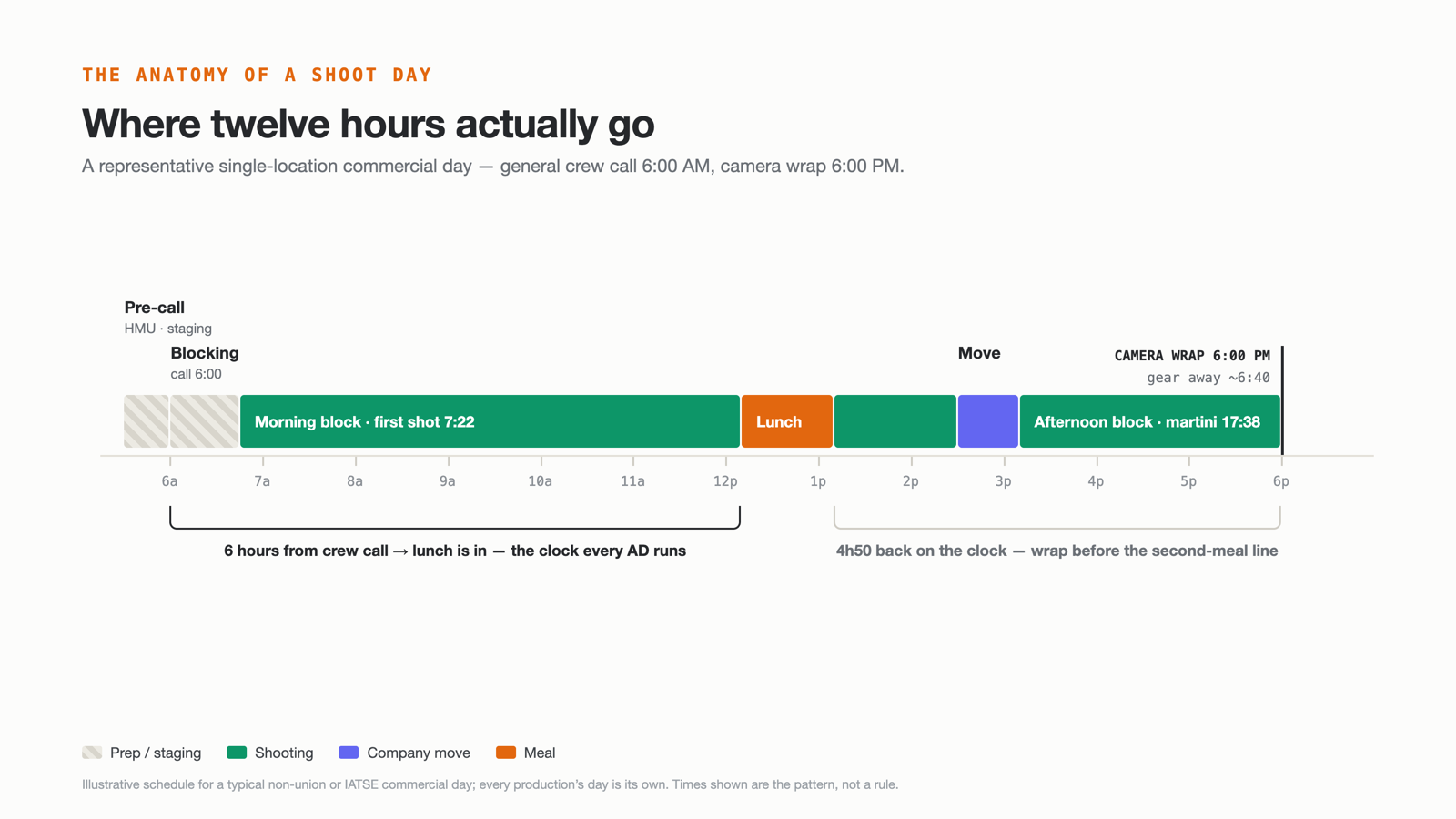
Every shoot day is different, and every shoot day is the same. The locations change, the scenes change, the weather definitely changes, but the skeleton underneath is remarkably consistent, because it's built from the same handful of clocks: the meal clock, the daylight clock, the overtime clock, and tomorrow's turnaround. Learn the skeleton and you can read any schedule at a glance, and build one that survives contact with reality.
Before general call
The day starts before the day starts. Hair, makeup, and wardrobe often have earlier calls so talent is camera-ready when the crew is. Drivers, catering, and sometimes a G&E pre-rig are moving earlier still. This is why individual call times exist: general crew call is the headline, but the sheet's real job is telling each person their time.
Crew call to first shot
The gap between crew call and the first shot is the morning's silent budget. Blocking, a safety meeting, lighting the first setup, final looks: on a well-run day that's 60 to 90 minutes; on a rough one it eats the morning. ADs watch this number obsessively because it predicts the entire day: a first shot that lands an hour late rarely gives that hour back.
The lunch anchor
Lunch isn't placed where it's convenient; it's placed where the meal clock demands. Under common union standards, a meal is due within six hours of call, so a 6:00 AM call means lunch is in by noon whether or not the scene is finished. The morning block is really "everything we can shoot before the clock says stop."
The afternoon: moves and momentum
If the day has a company move, it's usually after lunch: you move on a fed crew. A move costs more than its drive time: wrap-out, load, drive, load-in, re-light. Forty-five minutes on the sheet is often ninety in the world, which is why experienced producers fight to shoot out a location rather than bounce between two.
Martini, wrap, and the quiet hour after
The martini is the last setup of the day; camera wrap is when the camera stops rolling. But departments keep working: gear gets cased, trucks get loaded, paperwork gets signed. Crew aren't actually released at "wrap," and tomorrow's call time is already being negotiated by the math of tonight's finish (see our piece on turnaround for exactly how).
Why this matters for the call sheet
- The schedule is a chain, not a list: when one block moves, everything downstream moves with it.
- The times most likely to change late (first shot, lunch, wrap) are exactly the ones crews check most.
- A sheet that shows the current version of the chain, rather than last night's guess, is the difference between a crew that trusts the paper and a crew that texts the AD.
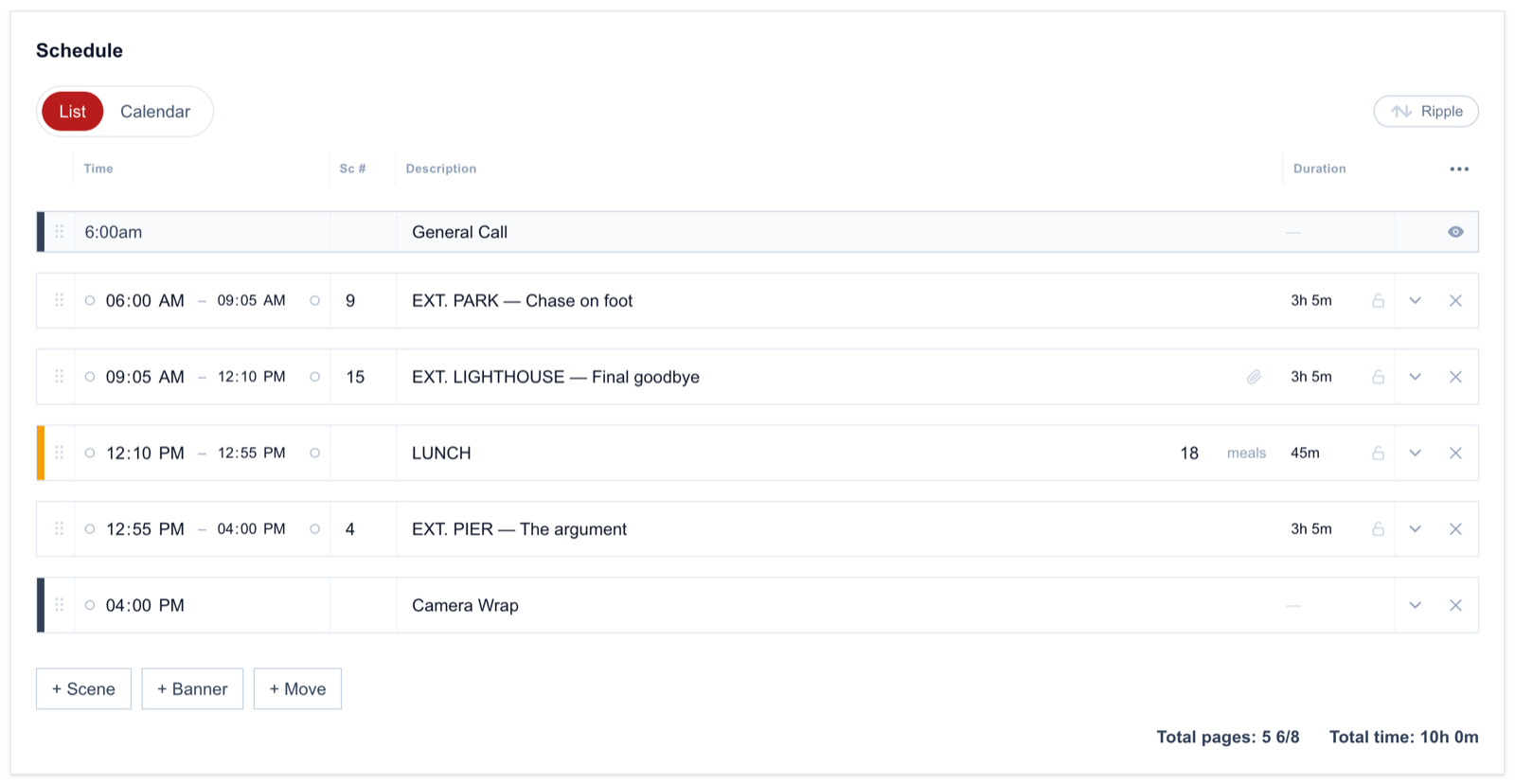
That chain behavior is why AllSheets schedules are built from strips that cascade and tether: change the lunch, and everything tied to it follows, and everyone's live sheet already shows the new times.
Are you crew?
AllSheets keeps every call sheet you’re sent in one place. Forward any sheet and it becomes a live, organized page with weather, maps, and your call time up top. Free, forever.
Join free →Are you a producer?
Build the day once and send everyone a personal live link. Late changes push instantly, and you can see who’s confirmed. 14-day free trial for production companies.
Start a free trial →