

On Set
Planning your shoot day around the sun
July 2026 · 6 min read
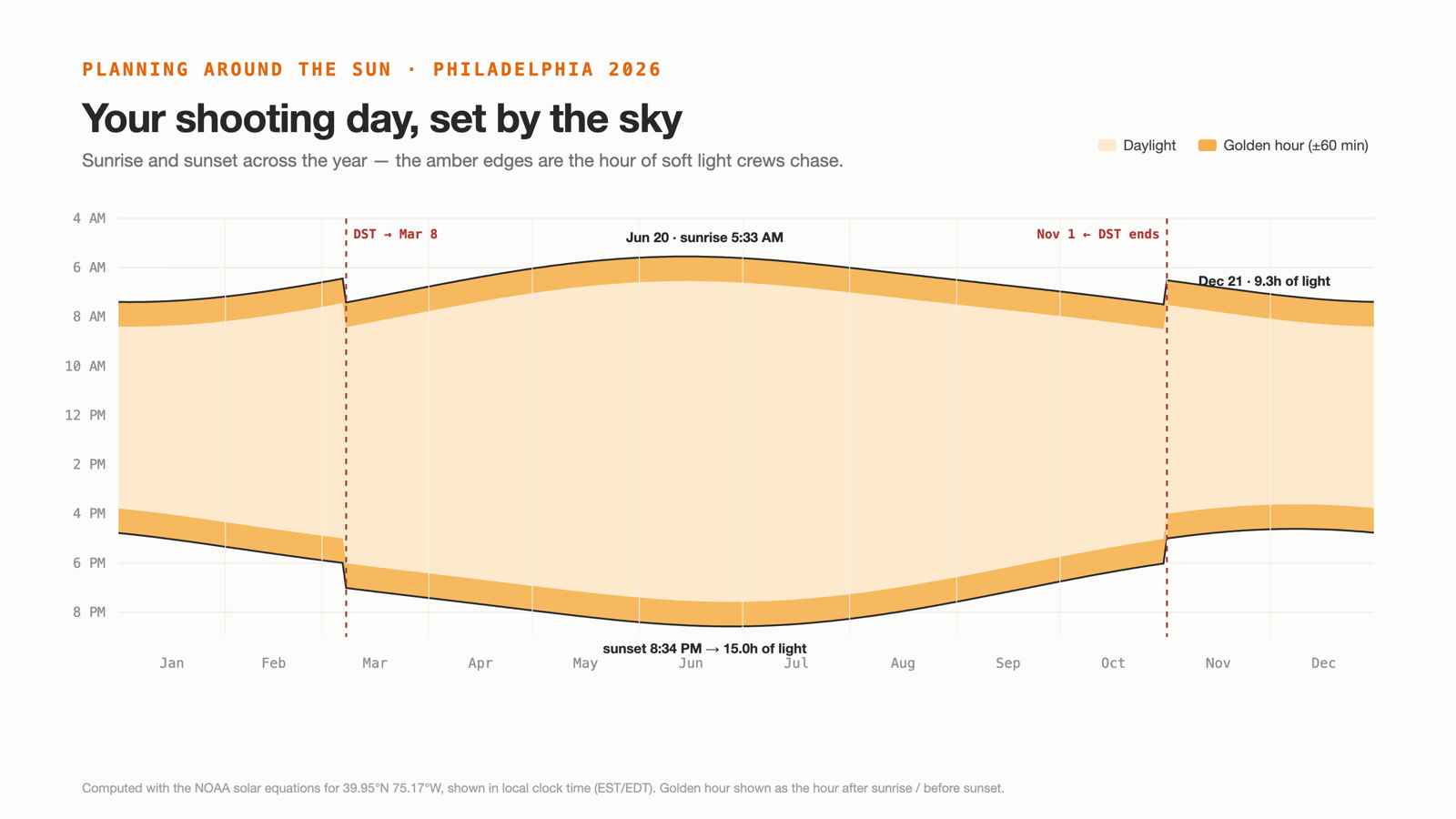
Interiors run on your clock. Exteriors run on the sun's, and the sun doesn't negotiate. The chart above is a full year of real, computed sunrise and sunset times for Philadelphia (NOAA solar equations, local clock time), and it's the single most useful picture for planning exterior days: the daylight band is your shooting window, and the amber edges are the soft light everyone's chasing.
The seasonal swing is enormous
In late June, Philadelphia gets about 15 hours of usable light: sunrise around 5:30 AM, sunset after 8:30 PM. In late December it's 9.3 hours, roughly 7:20 AM to 4:40 PM. That's a six-hour difference in the shooting day. A winter exterior schedule written with summer instincts doesn't just run tight; it runs out.
Golden hour is a schedule item
The hour after sunrise and the hour before sunset deliver low, warm, directional light, and they're the least forgiving slots on the schedule, because they end on time whether you're ready or not. Crews build toward them: block and rehearse in flat mid-day light, then shoot the money shot as the light drops. If the sheet says the sunset scene starts at 7:40 and sunset is 8:05, everyone on the crew is doing that subtraction. Put sunrise and sunset on the sheet so nobody has to guess.
Mind the DST cliff
Twice a year the clock lies. In spring, sunrise jumps half past an hour later overnight when daylight saving begins; in November, sunset falls off a cliff: one Saturday it's 5:55 PM, and Monday's sheet says 4:58. Productions get caught by this every single year: the schedule that worked last week strands your last two setups in the dark this week.
Practical rules of thumb
- Schedule exteriors first when daylight is scarce; interiors are your rain (and darkness) cover.
- Call earlier in winter: a 7:00 AM winter call burns your first shooting hour in the dark.
- Treat golden-hour scenes as hard-out appointments with the sky, and protect the hour before them.
- Check civil twilight, not just sunset: there are ~25 usable minutes after the sun drops, and then you're lighting night work.
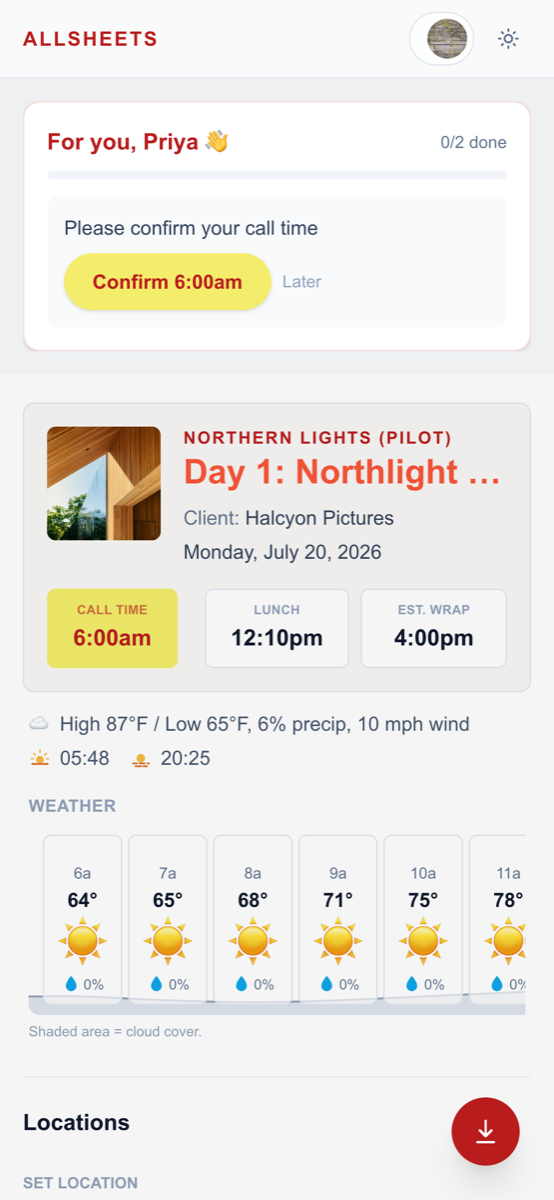
AllSheets pulls sunrise, sunset, and hourly conditions (with cloud cover, the difference between golden hour and a grey hour) onto every sheet automatically the moment you add a location. The sky still won't negotiate, but at least everyone's reading the same forecast.
Are you crew?
AllSheets keeps every call sheet you’re sent in one place. Forward any sheet and it becomes a live, organized page with weather, maps, and your call time up top. Free, forever.
Join free →Are you a producer?
Build the day once and send everyone a personal live link. Late changes push instantly, and you can see who’s confirmed. 14-day free trial for production companies.
Start a free trial →