

On Set
Your first big shoot day: what to know when managing a large crew
July 2026 · 8 min read
On a five-person shoot, you can hold the whole day in your head and fix problems by shouting across the room. Somewhere around twenty people that stops working, and by fifty it's a different job entirely: you're not doing the work anymore, you're routing information. Here's what changes and how to stay ahead of it.
The day is won or lost before it starts
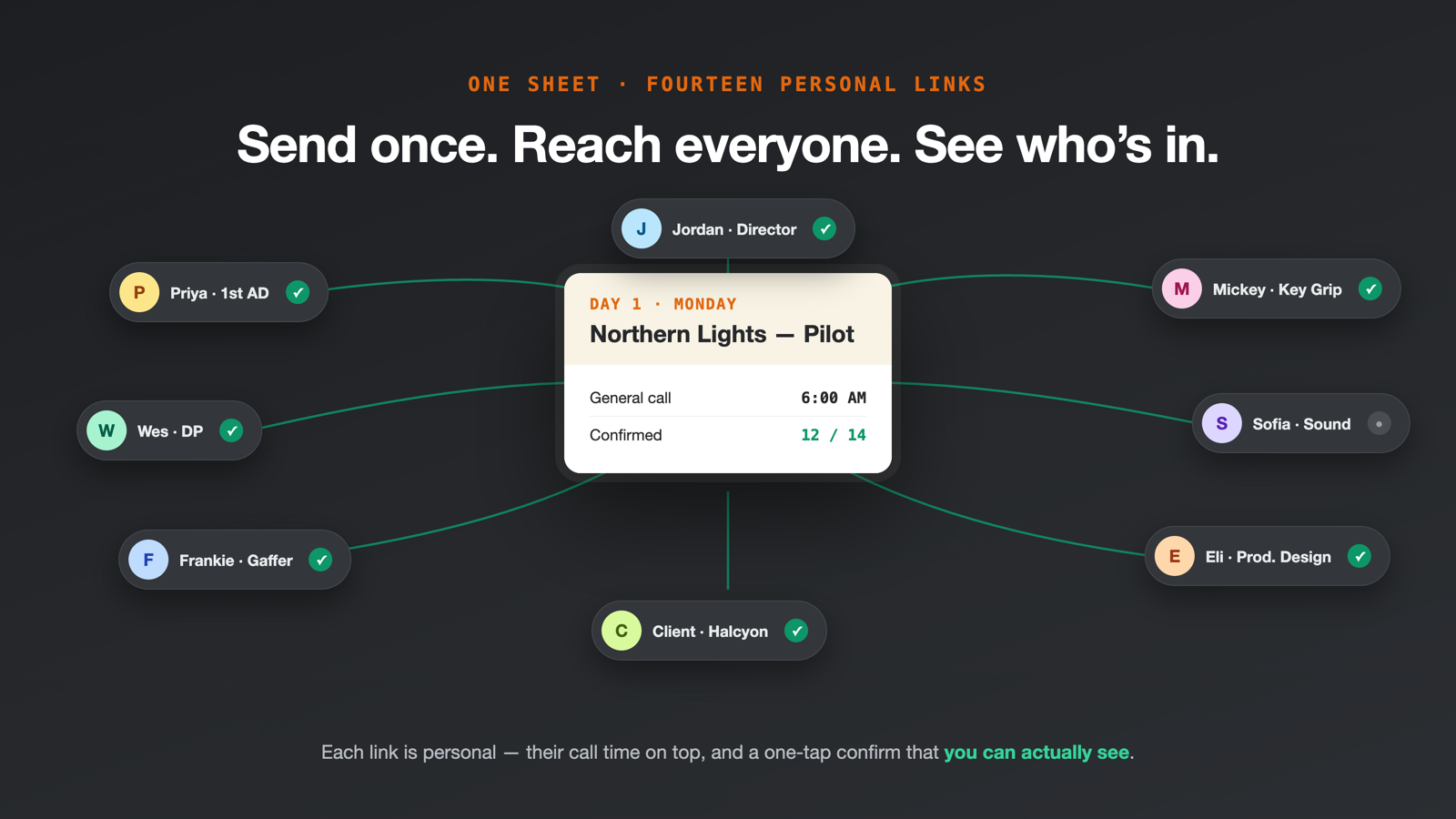
Big days don't get saved by heroics at 2 PM; they get saved the night before. Send the call sheet early enough that people can plan (the evening prior at the latest), and get confirmations: actual acknowledgments, not hope. Chase the stragglers before you go to bed. Every person who shows up already knowing their call, their parking, and their first setup is a conversation you don't have to have at 6 AM.
Department heads are your interface
You cannot personally direct fifty people, and trying reads as panic. Talk to your keys (gaffer, key grip, 1st AD, wardrobe, HMU) and let them run their teams. Give each department what it needs to self-serve: their equipment lists, their sides, their schematics, attached where they can find them, visible to them without wading through everyone else's paperwork.
Build slack into the schedule
- First setup of the day always takes longer than you scheduled. Plan for it instead of being surprised by it.
- Company moves eat 45–60 minutes with a big crew no matter what the map says. Schedule the move as its own strip, with a real duration.
- Meals are union math and morale math at once: six hours from call, no exceptions you didn't budget for.
- Protect a buffer before wrap. A large crew's overtime bill compounds fast, and 'we'll make it up' rarely survives contact with the afternoon.
Communicate changes like they're dangerous, because they are
With five people, a changed call time is a text. With fifty, it's a system problem: someone will miss the group thread, show up at the old time, and be rightfully furious. Late changes need to reach every affected person through a channel you can verify. This is exactly why live call-sheet links beat static PDFs: the sheet in everyone's pocket updates itself, and you can see who's confirmed the new time instead of guessing.
Feed the machine
Hot coffee at call, real meals on time, water everywhere, and a crew parking plan that works. None of it is glamorous; all of it is the difference between a crew that runs through walls for you at hour eleven and one that's watching the clock. Large-crew management is mostly logistics wearing a headset.
Afterward: close the loop
Wrap the day by capturing what you learned while it's fresh: which departments needed more lead time, where the schedule lied to you, who stepped up. Your next big day gets built on this one's paperwork, which is also a good reason to keep every call sheet, schedule, and attachment in one place you can search later instead of scattered across three inboxes.
Are you crew?
AllSheets keeps every call sheet you’re sent in one place. Forward any sheet and it becomes a live, organized page with weather, maps, and your call time up top. Free, forever.
Join free →Are you a producer?
Build the day once and send everyone a personal live link. Late changes push instantly, and you can see who’s confirmed. 14-day free trial for production companies.
Start a free trial →